I love writing about landscapes.  I’m probably guilty of finding them far more interesting to write about, at times,  than human beings.  That’s because I think so much of humanity is defined by the natural world we emerged from (and I include the weather as a part of that).  For so many thousands of years we depended so crucially on the land, on the fertile earth and the just-right ratio between sunshine and showers, that the behaviour of the landscape dictated the terms of our culture.  I bet you could root everything that we do and are in the way the Earth behaved back in the day.  Landscapes are a mirror held up to humanity, which may explain our tendency to romanticise them, to take comfort in the idea that there is a wild country out there to which we might one day retreat and in which we might be better connected to ourselves.  It could also explain part of the affront we feel when a landscape is bulldozed or sliced in half by a new motorway or rail link.

I like writing that reflects these notions by making the landscape something or someone who gets involved in the lives of those who inhabit it.  Likewise in the ‘real world’ (I hate that term but there are few alternatives for what it implies) … Likewise in the world of sticks and stones, some landscapes lend themselves so well to personification that they become distinct characters.  Mountains are good examples, named and ascribed with personalities that reflect their nature.  A mountain of sun-bathed sloping meadows where sheep graze and crops grow is a gentle giant.  Conversely, a collossal tor atop which the stormclouds muster and down whose flinty slopes the flash floods race is a menacing behemoth who’d like nothing better than to snuff out the little beings who dwell beneath its shadow.

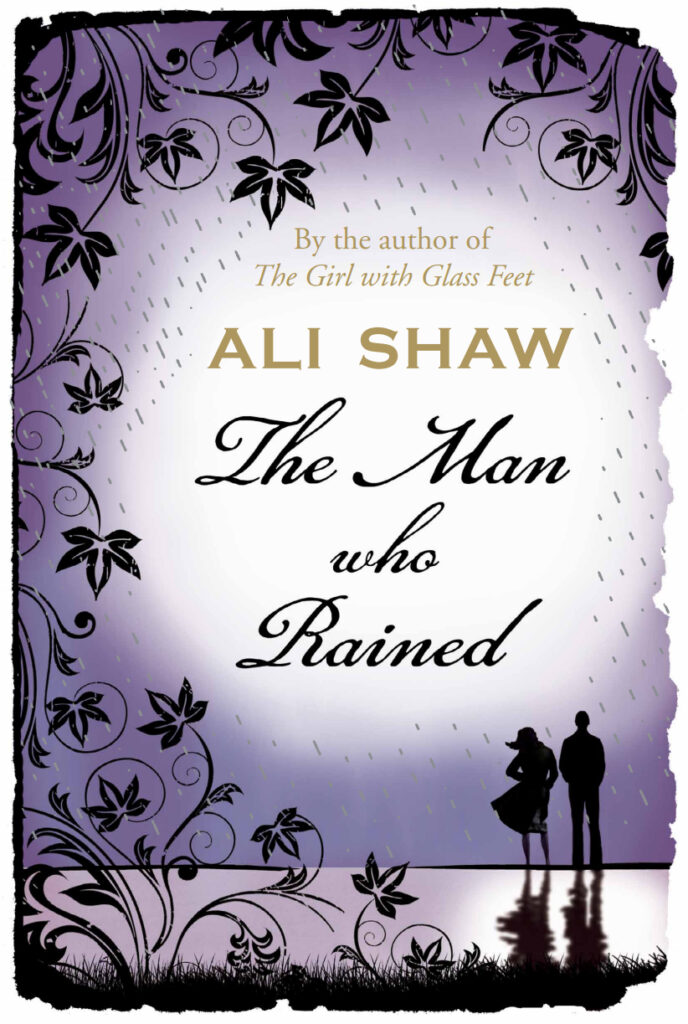
I try to save up and collect pictures of landscapes that appear to me so rich in character that I can imagine them rising up to walk the horizons when everybody else is tucked safely in bed.  While I was writing The Man who Rained I filled my pinboard with Turner’s landscape paintings.  I bought a hefty catalogue of his work and filled a notebook trying to describe his mountains and his skies in prose.  Much of the descriptive writing in the novel originated in such scribbling.  They call Turner the painter of light but he’s as much for me the painter of the air itself, for wherever he paints a mountain he paints a haze or formative cloud, or a full-blown Biblical torrent smashing its way to the foreground.

I had vague intentions of posting various other images and photos saved up during the writing process.  The internet is a great source for creating virtual scrapbooks to reference when stuck for words.  But rather than include those I’ll just link to the below video, which came out when I was finishing up the novel’s final edit and which tours rather breath-takingly the sort of places I was aiming to describe.


She opened her eyes.  The headlights shimmered across nests of boulders and trunks of stone on either side.  No grass, only slates splitting under the weight of the car, each time with a noise like a handclap.  Eyes closing, opening.  The clock moved on in leaps, not ticks.  Either side of the road were trees bent so close to the earth they were barely the height of the car, growing almost parallel to the shingly ground.  A wind whistled higher than the engine noise.

‘Awake again,’ said Kenneth jovially.  But she was asleep once more.

Awake again.  The moon lonely in a starless sky.  Swollen night clouds crowded around it.  And beneath those the silhouettes of other giants.

‘Mountains,’ she whispered.

‘Yes,’ said Kenneth with reverence.  ‘Mountains.’

Even at this distance, and although they looked as flat as black paper, she had a sense of their bulk and grandeur.  They lifted the horizon into the night sky.  Each had its own shape: one curved as perfectly as an upturned bowl, one had a dented summit, and another a craggy legion of peaks like the outline of a crown.

She lost sight of them as the car turned down an anonymous track.  The only signpost she had seen in these last few awakenings was a rusting frame with its board punched out, an empty direction to nowhere.

They had followed that signpost.

- from The Man who Rained by Ali Shaw


Jan 112012
 

We think of ourselves as land animals, but in truth the air is our element.  We live on the seabed of a gaseous ocean, and just because the air we inhabit is invisible to us that does not mean it does not exist.  What is invisible to us is so often what is most important.  While writing this book I have come to think of the air as something reassuringly connective.  Something that links me to you, as it does you to everyone you know.  We are all submerged in it and drawing upon it together.  The air in your lungs becomes the air in your blood, in your heart.  As long as you remain alive and breathing, a part of you is always air.

We think of the clouds as distinct objects floating in empty space backdropped by blue, but in truth they are just patches of air that have lost their invisibility.  They are a heavy sort of air more susceptible to gravity.  They are the patternation of the thing we are breathing and we can breathe them on mountaintops or on foggy or misty days.  Then the air we are breathing is cloud and because the air we breathe becomes a part of us we are part cloud too.

In books and films the weather has always been part human, raining in sympathy with characters who are down, raging during wars and ordeals, letting rip the feelgood fuzzy sunshine when the happy ending comes to pass.  At some point a few years ago I began to wonder what it would be like if the weather really did come to life, becoming flesh and blood in various forms.

These are some drawings I made while writing The Man who Rained.  They’re studies of Finn Munro, who is the titular character.  He is, of course, part weather, perhaps all weather, although you’ll have to read it to determine for yourself his exact complexion.


Happy New Year, my dears.  I hope those mince pies were piping hot and that mulled wine was topped up with enough brandy to make you giddy.

I’m going to be at Blackwell’s Broad Street, Oxford, at 7pm on Tues 17th January to talk about The Man who Rained with the fabulous Roma Tearne.  It would be wonderful to see you there if you can make it.  This is going to be my first time talking in any depth (in public, at least) about the novel so it will be an exciting first for me.

If you’d like to come, tickets are £2 a pop from Blackwell’s and all the details are here.


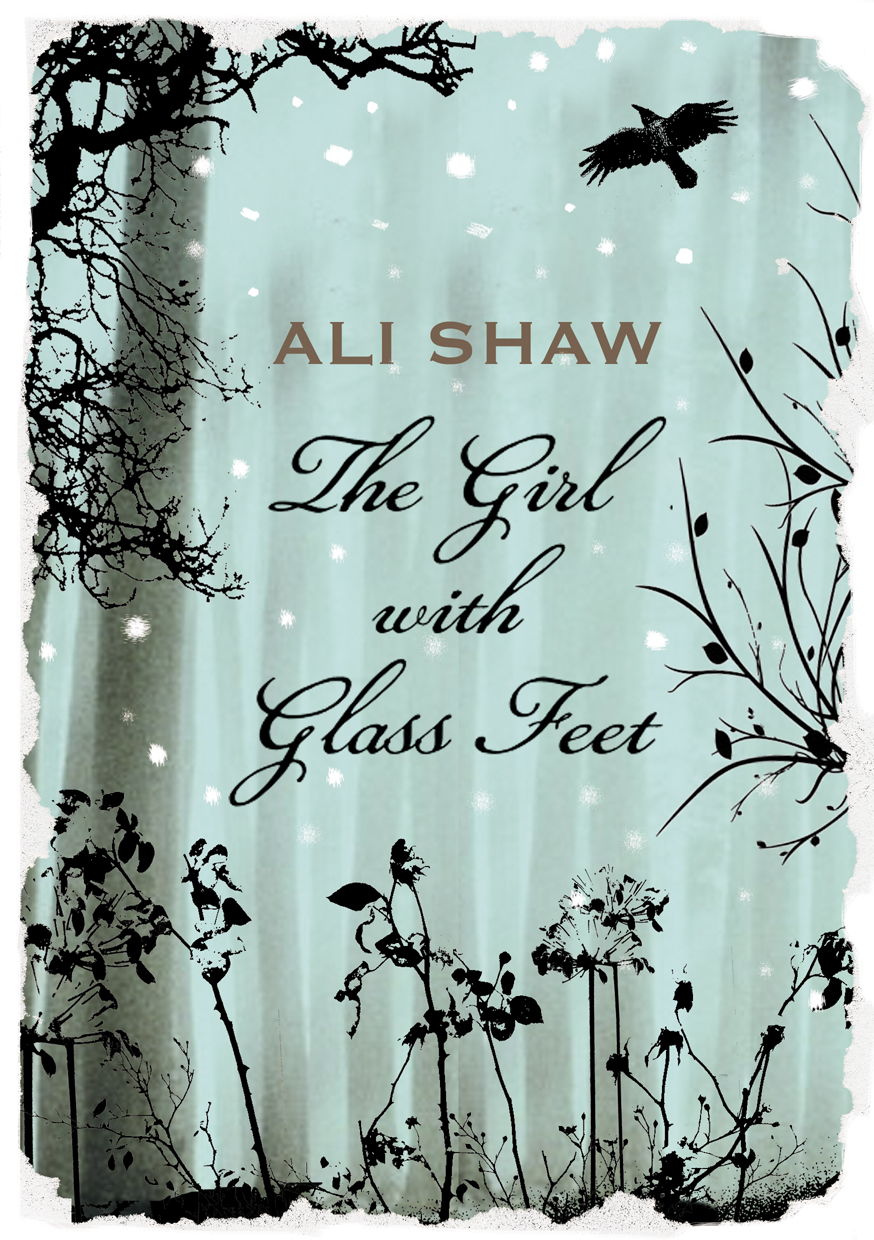
I love this time of year.  Mistletoe and wine (and port, of course, and brandy and mulled ale if you can), and trying to grab an hour to read beside the Christmas tree.  I enjoy the retrospectives that appear in the press, the closing year’s events considered at a pace there’s no time for during the preceding fifty one weeks.  That said, it’s tricky for me to be retrospective this particular year, with The Man who Rained published on the 1st January.  It’s nerve-wracking, to say the least.  I’ve just got back from some last minute Christmas shopping, from weaving through the long queues at the butcher’s door and the cheesemonger’s, and while out I spotted it already on the shelves, which was an experience just as surreal and rewarding as first seeing The Girl with Glass Feet there.

Above are some drawings to accompany those first glimpses of the novel.  I drew a lot of black-and-white mountains and smudgy skies while I wrote it, and will post more over the next few weeks.  In the meantime I hope you have a marvellous Christmas this year.  If you don’t celebrate Christmas, I hope you have a recuperative holiday.  Either way, may 2012 bring you magic and gladness.

Dec 152011
 

Regular readers may have noticed that I haven’t talked a great deal about my novels here.  There isn’t a lot, if I’m honest, that I feel it’s helpful to say about them beyond what you’ll find between the front and back covers of the books themselves.  I can’t add to or qualify the prose, and I don’t think that anything supplementary I write can enhance the experience of reading them.  Hence I prefer to talk about the things I enjoy or that inspire me, in the hope that those who enjoy my writing might enjoy them too.  In the hope that the act of compiling such enjoyments sheds light on my writing in some abstracted way.

The Man who Rained will be published in a little over a fortnight and I want to mark that publication here on the blog.  At the same time, in keeping with the above, I don’t have a lot to say that isn’t said by the story itself.  So I plan to post some of the things I drew around the time I wrote it, some of the things I learned about Cumulonimbus, some of the footage I watched of the weather overturning the world, some of the things that I read about the clouds and the atmosphere and the eerie old legends of thunder beasts and animals that vanish in a shimmer of rain.

The book is about the weather coming to life.  Or about when people come apart into something like weather.  I see it as a sort of sister book to The Girl with Glass Feet, but there I go talking about it like I said I shouldn’t.  It’s better that you decide what it’s about, if you decide it is indeed about anything. Reading about lightning bolts made me want to write it.  I thought they worked much like people do when they’re looking for love…

Site Redesign

 Uncategorized  Comments Off
Dec 072011
 

As you can no doubt tell if you visit here often, I’ve just given my website a lick of paint.  The only kind of web design I know is that of Doctor Frankenstein, and as such this site is more stitched together than coded.  I figure if I throw enough lightning at the thing it will eventually get up and walk, but I apologise if it leaves a mess of torn links, mauled images and hankerings for a bride in its wake.


More soon.  The new book is on the horizon…


Inspired by the new Grandchildren.tv video for Fleet Foxes, and by the way people enjoyed the stop-motion clips at the end of my post about Scrapefoot, I thought it would be fun to start a Stop-Motion Film Night, an occasional series of clips and films from this most painstaking and enchanting school of effects and animation.

I can’t pretend to be an expert on this, I just love digging up moving pictures and bits of old puppetry.  Anything I do  know comes straight out of Ray Harryhausen and Tony Dalton’s A Century of Model Animation, which is a fine and fully illustrated history of the technique.

I find there’s something eerie about films from eighty or ninety years ago.  Perhaps it’s the probability that all of the actors have passed away and we’re watching a cast of ghosts.  Perhaps it’s just the flicker and the grain, and the sense it gives of another era, a bygone worldview.  This film, The Haunted House, is already a centenarian.  Since it’s silent and we live in an audio visual age, you need something to listen to alongside it.  I recommend the new track from Birdengine.  Hit play on both of these in quick succession.  The music will finish just around the part where the house starts swaying and is put into the devil’s sack, but such tragic endings require solemn silence.


Lotte Reiniger
made a series of silhouette animations based on Grimms’ fairy tales, which the BFI has uploaded to Dailymotion.  Her biography’s worth checking out.  She and her husband did all they could to escape Germany when the Nazis took power, but were forced back to Berlin with the advent of World War Two.  They survived, thank goodness, but it would be interesting to investigate how her experiences affected her work on the Grimms’ stories.  Here’s Sleeping Beauty, which is my favourite because of the cook and the thieving kitchen boy.

This next is a clip from The Great Rupert, which you can watch in its entirety here (with the caveat that it’s about an hour and a half, and the best bit happens in the first three minutes).  It’s a film about a squirrel who can dance a highland jig.  Apparently, the effects were so convincing in their day that cinema-goers thought they were watching a trained animal.  In truth, of course, it was stop-motion.  A reanimated squirrel dancing with the charming-but-creepy strut you would expect of a taxidermist’s creation.  If you watch the whole film be warned that there are hardly any other dances with squirrels.  I guess that just goes to show what an effort it was to shoot the brief material that was included.


The Great Rupert
reminded me of something far more recent.  The video to Radiohead’s There There, which apparently was inspired by everyone’s stop-motion hero, Bagpuss.  I can easily picture T. G. Rupert living among those roots and branches, or dancing his jig at that wedding party.  In fact, I suspect that’s him in the mossy house at 1:02, smoking his pipe and reminiscing with his stunt double about their glory days.


AAmerican Indian Myths and Legendsh, Coyote.  He’s one of the many glories of Native American folk stories and, for me, perhaps the prime glory.  He’s a lot like the fox in European folk stories, in that he can be good or bad, wise or foolish, or all of these things at once.  In short, he’s very human, and that’s why I love him.  Now, after seemingly endless airbrushing, I’ve finally finished work on one of my favourite Coyote stories.  It’s a Cheyenne tale, and one of the places you can find it is in the fantastic American Indian Myths and Legends.

Originally I was just going to draw a few quick sketches and post them up along with a link to the text.  Then I started having trouble drawing stars – thank you to those on twitter who heeded my pained cries.  The stars in the story are living beings, so I wanted to draw them as such, rather than as big balls of gas.   But how?  I didn’t really ever figure that out, so when I wrote up my own version of the story I left the visuals out and decided instead to draw my own ideas together into one giant picture of the galaxy.  Click on the final illustration to explore it close up.  It’s quite large, as space should be, so I hope it loads okay and doesn’t reduce your monitor to smoke and exposed springs (which is what monitors are made of, right?).

Here’s Coyote Dances with the Stars.

Coyote sketch


The book industry’s an odd one.  About three weeks ago I finished handwriting the first draft of my third novel, which I’ve since been typing up to see what I’ve got on my hands.  In the meantime my second book, The Man who Rained, is at the printers being turned into something glossy and pretty and ready, come January, to go out into the big wide world.  Always as a writer you’re working on something a step ahead of where it appears you are now.  I was writing The Man who Rained when The Girl with Glass Feet came out, and I hope to be writing something new when/if the novel I’ve recently started sees the light of day.

All of that makes me really appreciative of those of you who’ve taken the time to read this blog, or comment on twitter or facebook or by email.  It’s preciously immediate, and that (along with the fact that you’re all such lovely people) is the reason why I enjoy sharing things with you.  For a while now I’ve been hoping to give you a new fairy tale.  It’s taking me longer than anticipated so, in the meantime, here are a few previews.

cdwts3cdwts4

cdwts1cdwts2

The reason for the delay is the drawing of stars.  There are stars in this story, but they aren’t just orbs of fire.  They’re living beings, and working out how to portray them as such has stumped me.  Maybe I’m just burnt out with personification (The Man who Rained is all about the weather coming to life) but I’ve at least decided I want to use a certain technique to draw stars: I want to make negative images with graphite sticks and pencils, then invert them using paint software to get a luminous effect.

Here’s a test run I did.  This won’t make the final cut, but it gives you an idea of how the game works.  This

star whale sketch

becomes this

star 7

So maybe next week, maybe the week after, I’ll have cracked it and can finally post the fairy story.  For now I’d better get back to the typing.  My handwriting is a tangle and unravelling it is a slow process.  Some parts I simply can’t read, and I have to hold them up to the light or stare at them like magic eye patterns.  It’s fun deciphering it, but it’s slooooowww.

In the meantime I want to recommend this.  I hope that Ghostpoet goes on to festoon his pork pie hat with awards, for he richly deserves them.  This is a track that writers are bound to relate to, and the album Peanut Butter Blues and Melancholy Jam is swiftly becoming the soundtrack to the pitter-patter of my keyboard.  Enjoy…

© 2012 ALI SHAW Suffusion theme by Sayontan Sinha